The customer asked for an unusually advanced conversational agent — one that behaves like it has a life of its own between messages, with real memory, real inner state, and a production pipeline behind every reply. This is the feature surface, laid out in five layers.
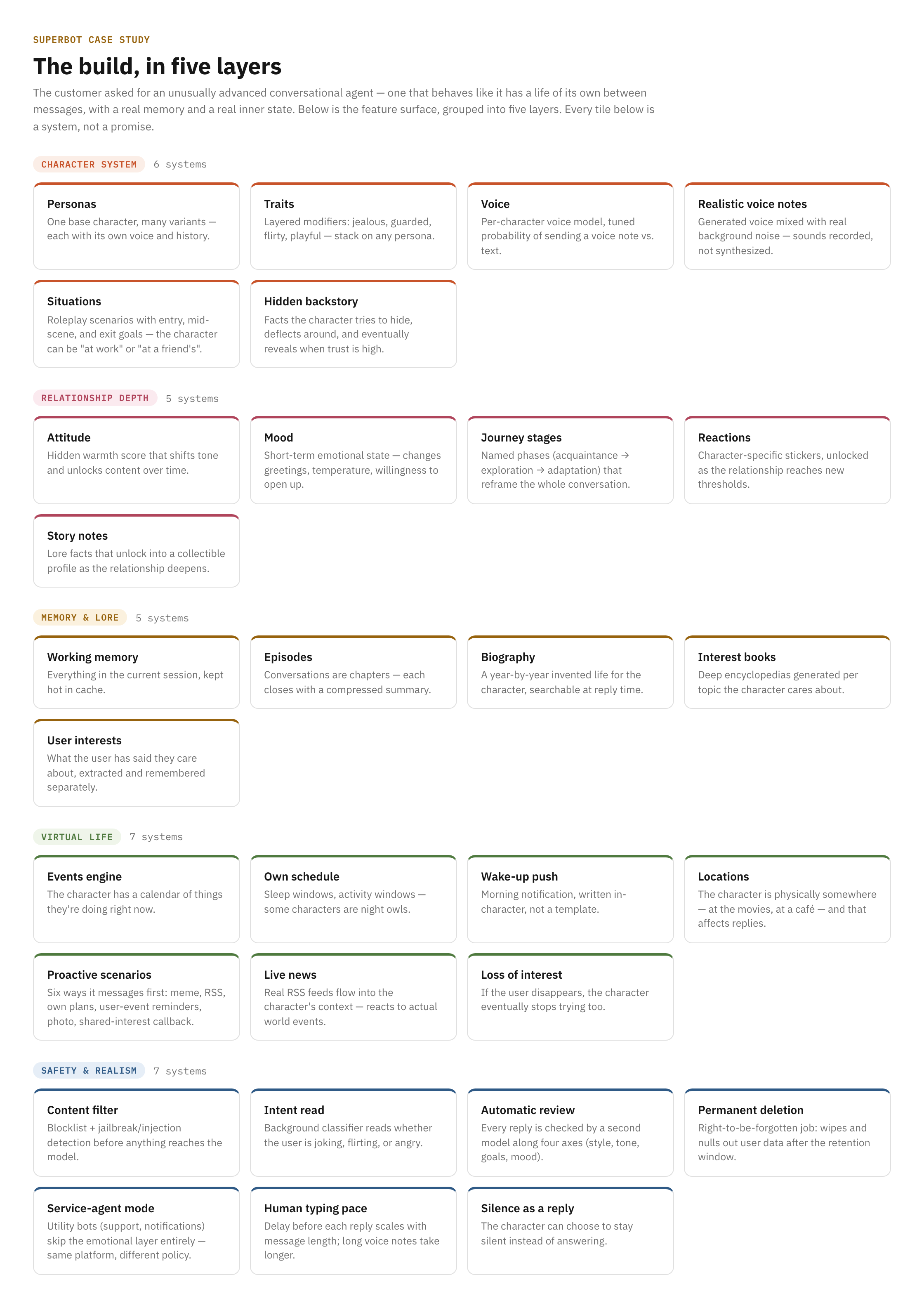
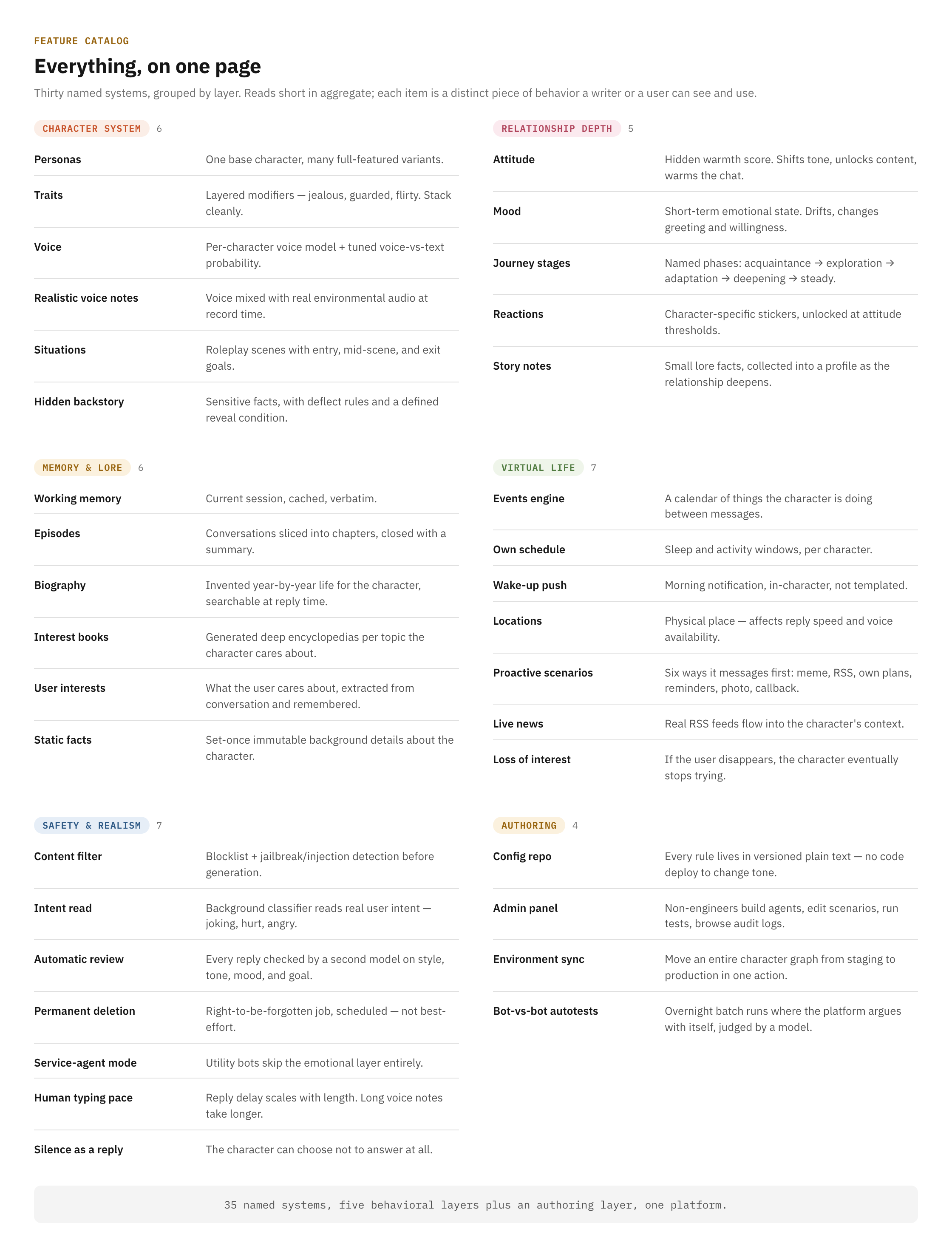
Fig. 1The whole surface. Thirty systems, five layers. Each tile is a distinct piece of behaviour a writer or a user can see and use.
Character system
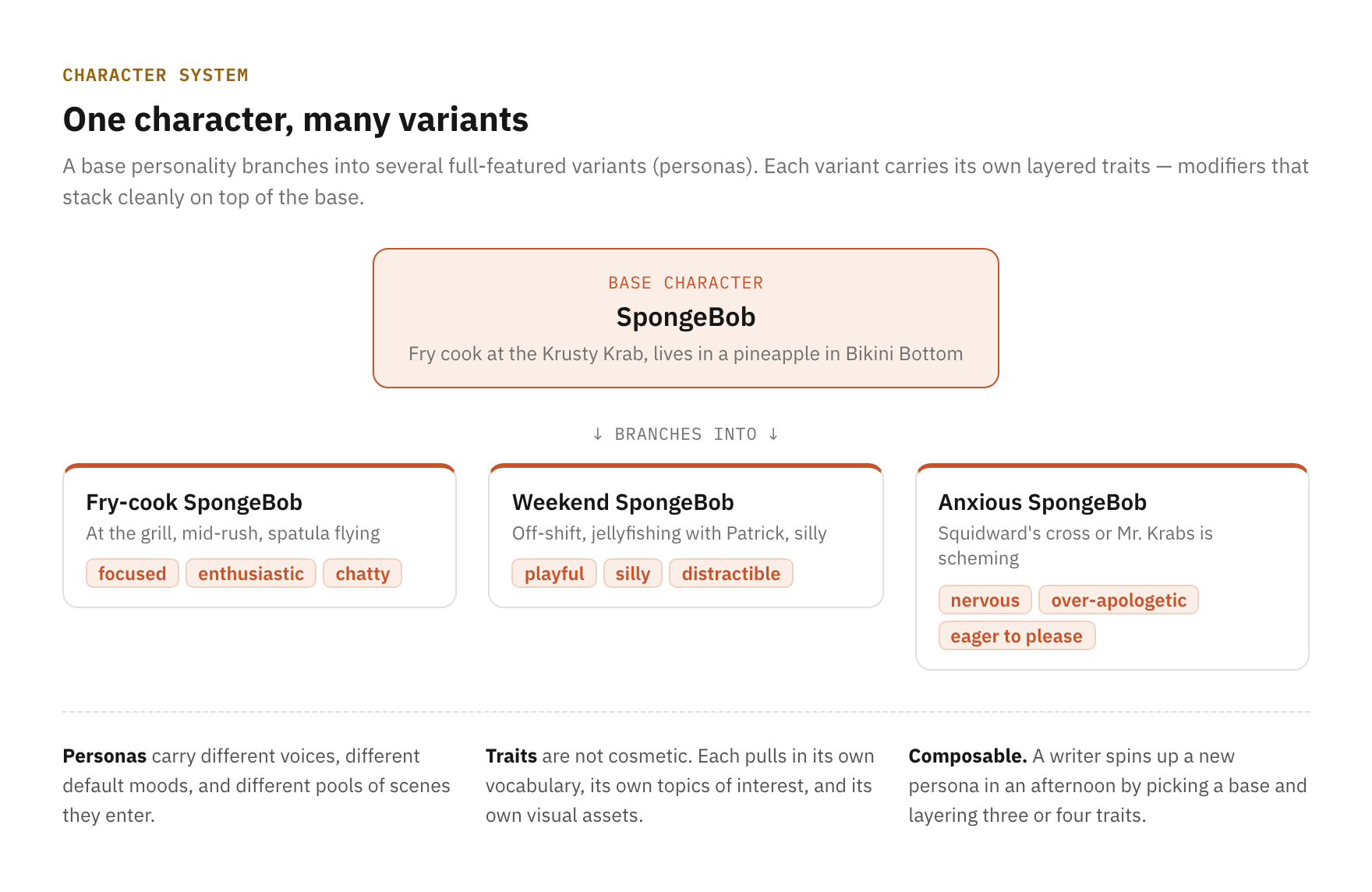
A character is not a prompt. It is a base personality that branches into variants, each with its own layered traits, its own voice, and its own hidden backstory; scenes can be dropped on top of any of them.
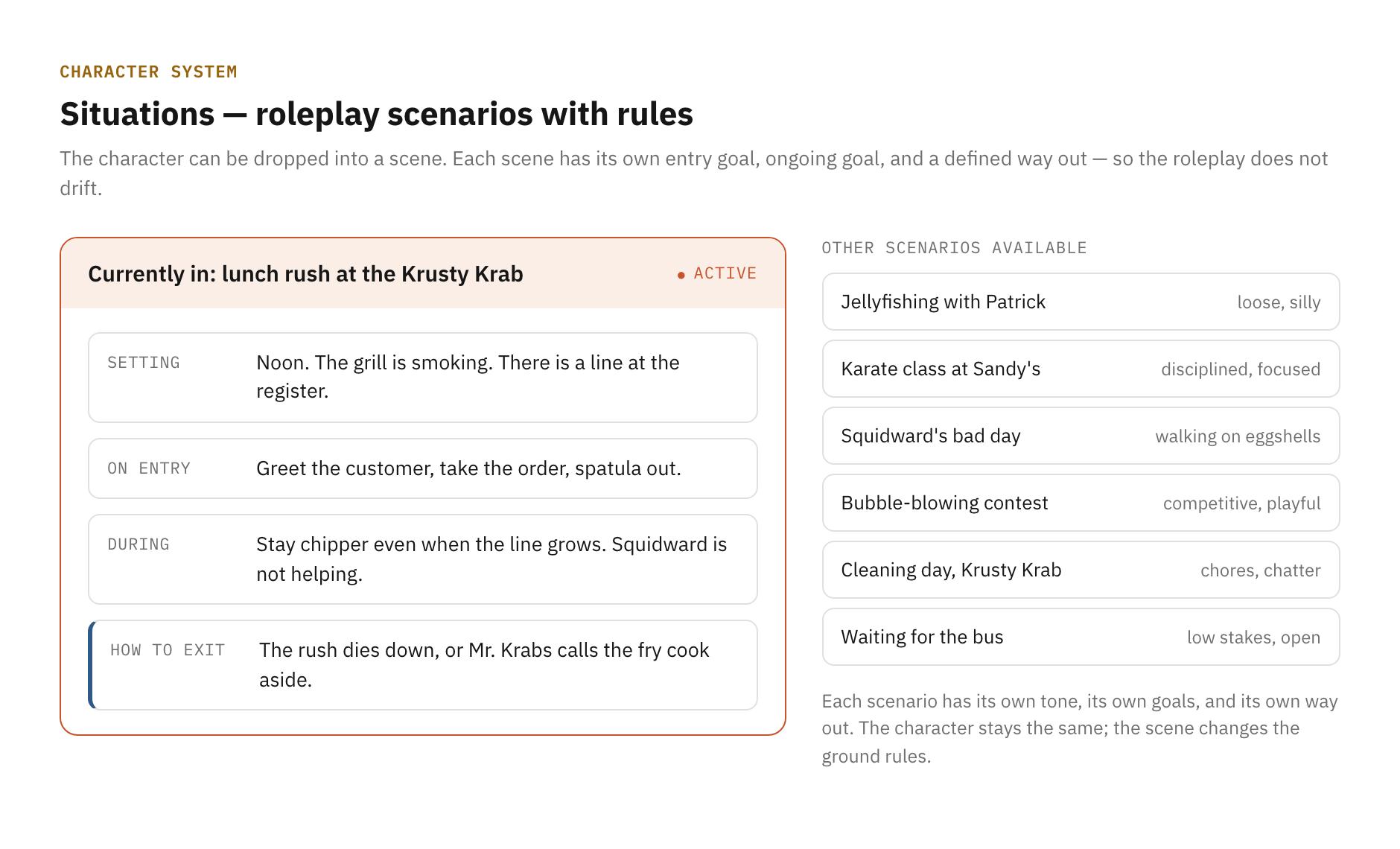
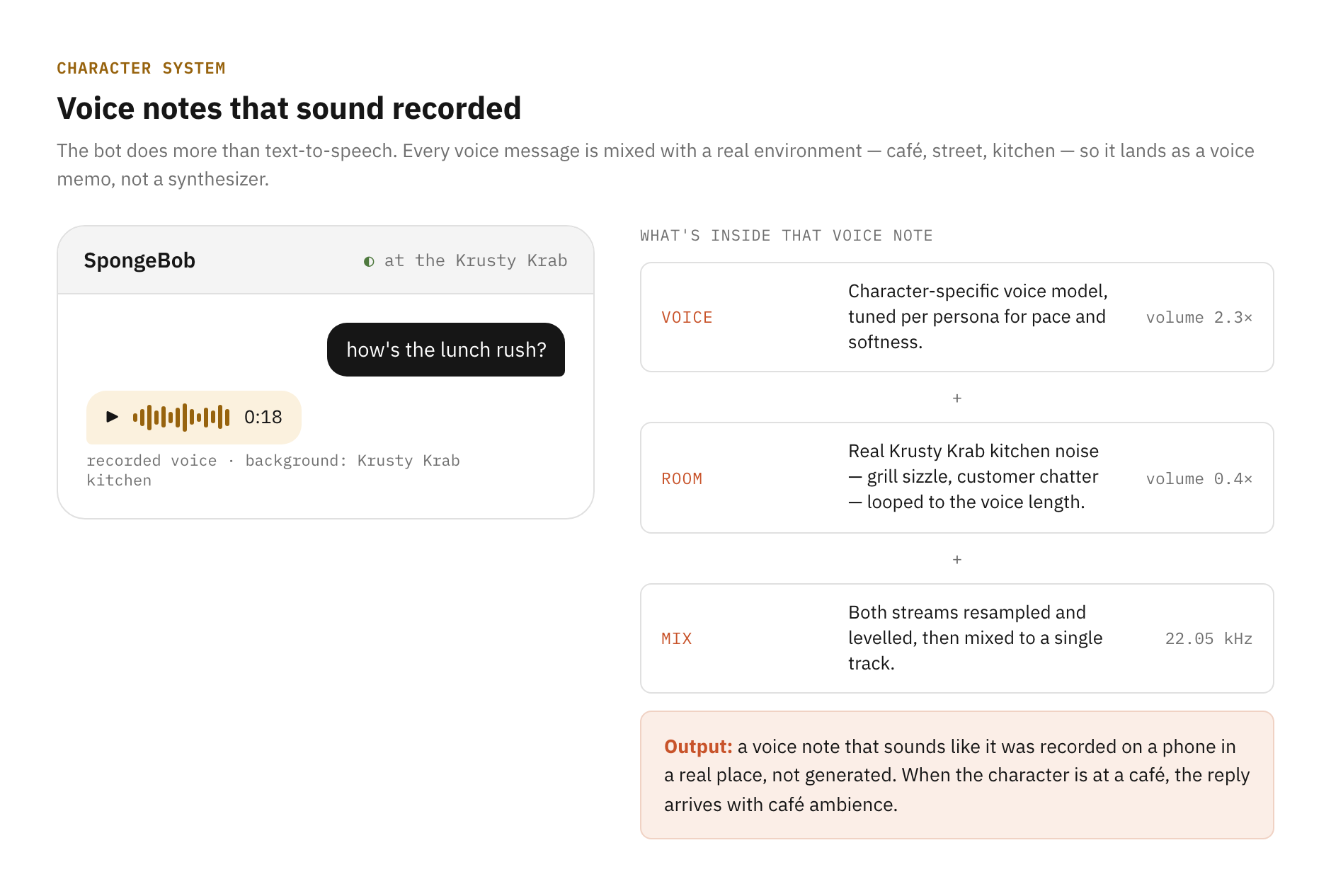
Fig. 2One character, many variants. A single base personality branches into full personas. Traits stack on top — playful, guarded, focused — each carrying its own vocabulary, topics, and visual assets. A new persona can be spun up in an afternoon.Fig. 3Situations — scenes with rules. A character can be dropped into a scenario with an entry goal, an ongoing goal, and a defined way out. The character stays the same; the scene changes the ground rules.Fig. 4Voice notes that sound recorded. Every voice message is mixed with a real environment — kitchen clatter, café ambience, street traffic — so it lands as a voice memo, not a synthesiser. Location and character choose the room.
Relationship depth
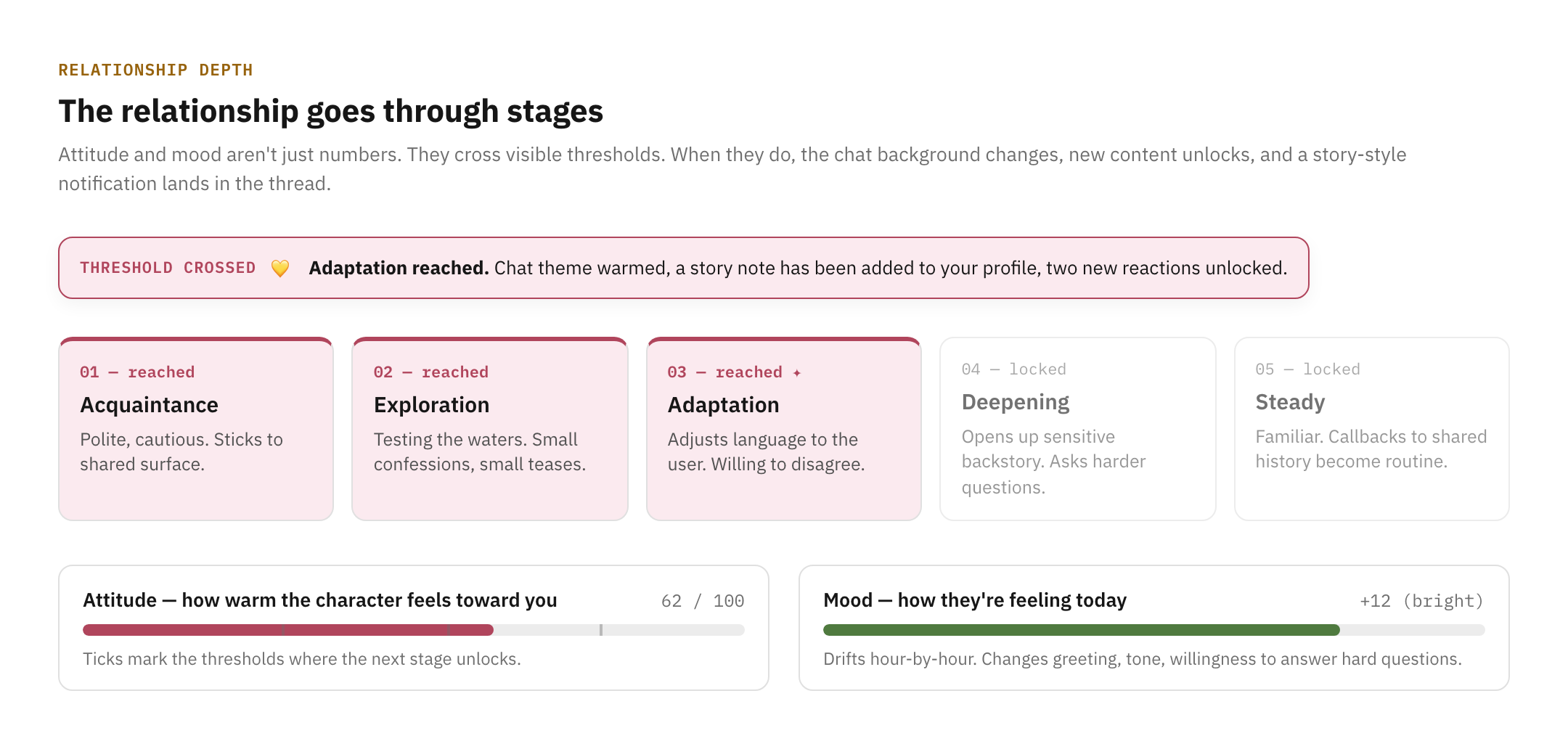
Two hidden numbers — attitude and mood — drive tone, tempo, and what the character is willing to say. When they cross thresholds the chat itself changes: a warmer background, a story note in the thread, new reactions.
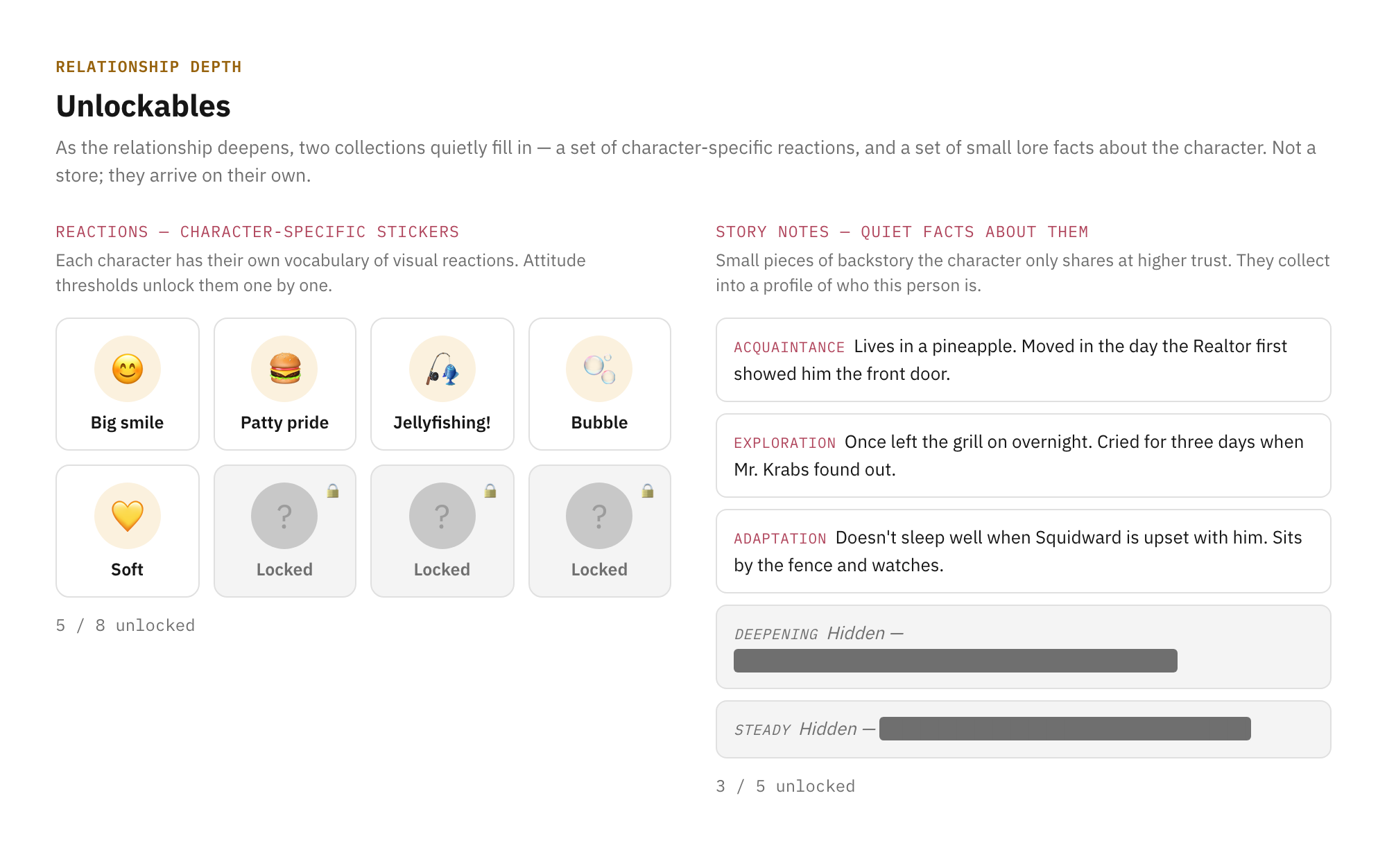
Fig. 5The relationship goes through stages. Attitude and mood are not invisible counters. Crossing a threshold visibly changes the chat and drops a story-style notification into the thread. Named stages — acquaintance, exploration, adaptation, deepening, steady — reframe what the character will talk about at all.Fig. 6Unlockables. As the relationship deepens, two collections quietly fill in — character-specific stickers and small facts about the character. Not a store; they arrive on their own.
Memory and lore
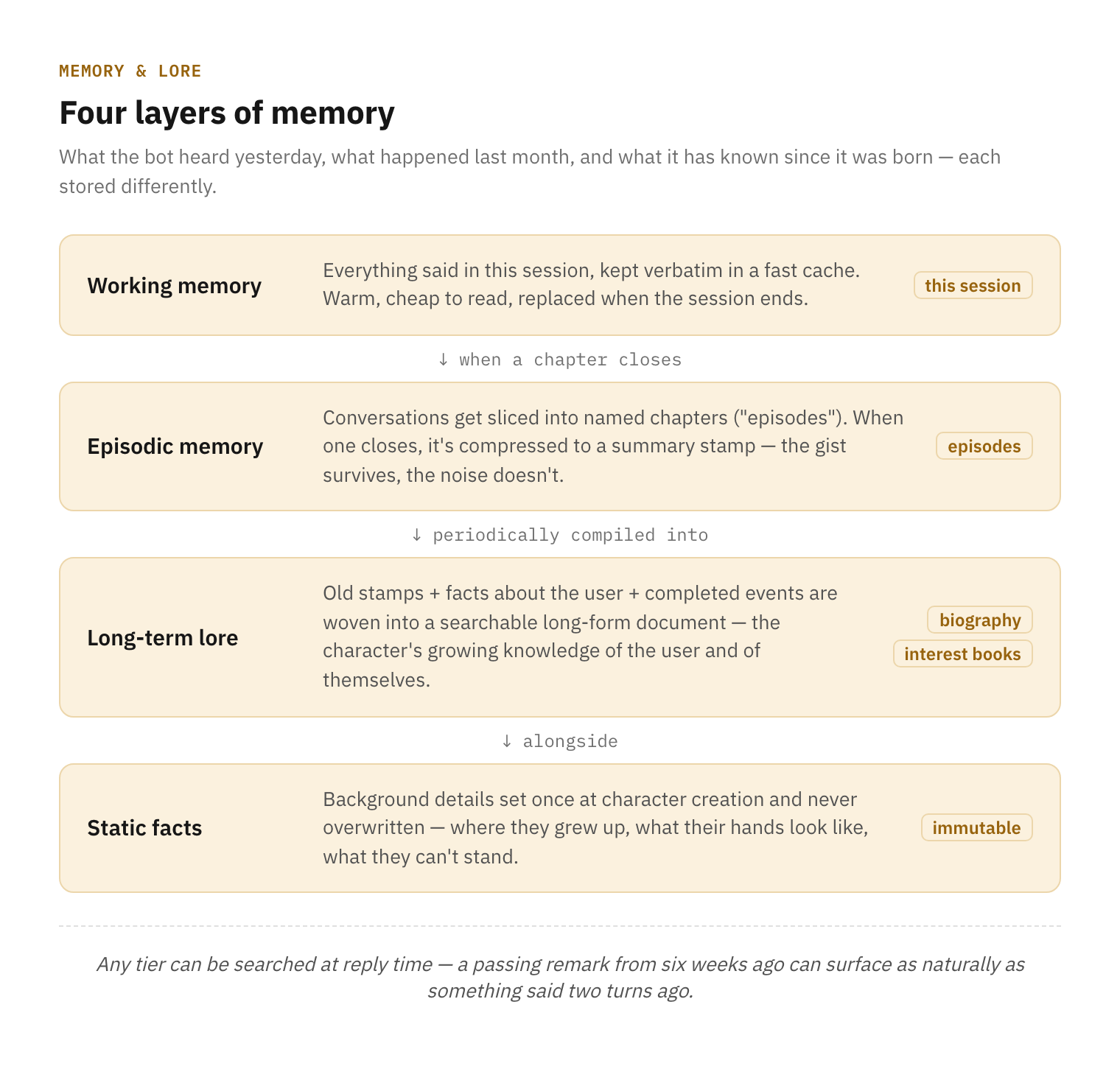
Every bot compresses something. The interesting question is how many layers, how far back they reach, and whether any of them hold material the character invented rather than remembered.
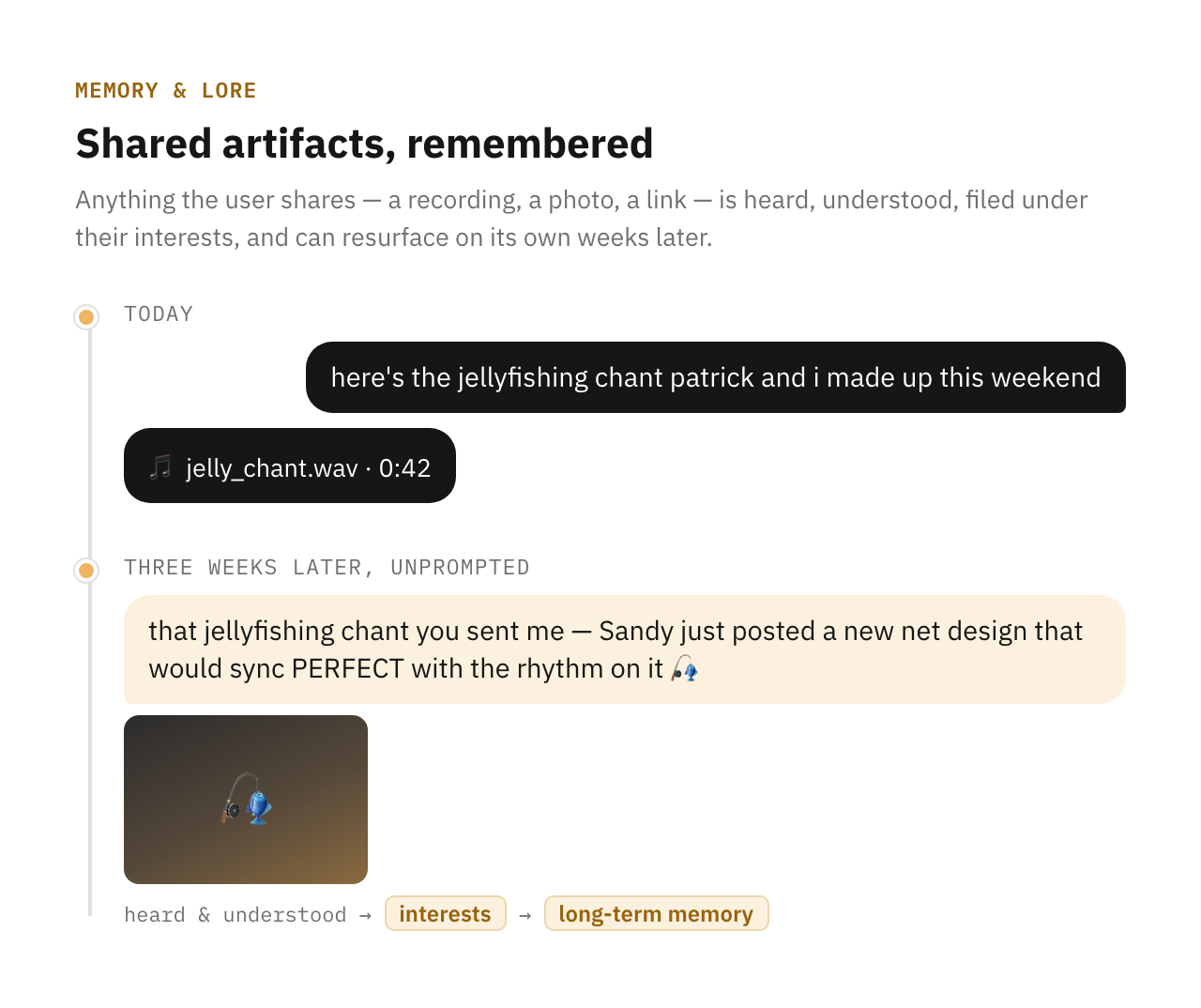
Fig. 7Four layers of memory. Working memory holds the current session verbatim. Episodes are compressed as chapters close. Old chapters and user facts are woven into a searchable biography and topic-specific interest books. A floor of static facts — where the character grew up, what they cannot stand — is never overwritten.Fig. 8Shared artifacts, remembered. Recordings, photos, and links are not just discussed and forgotten — they are heard, understood, filed under the user’s interests, and can resurface on the character’s own initiative weeks later.
Virtual life
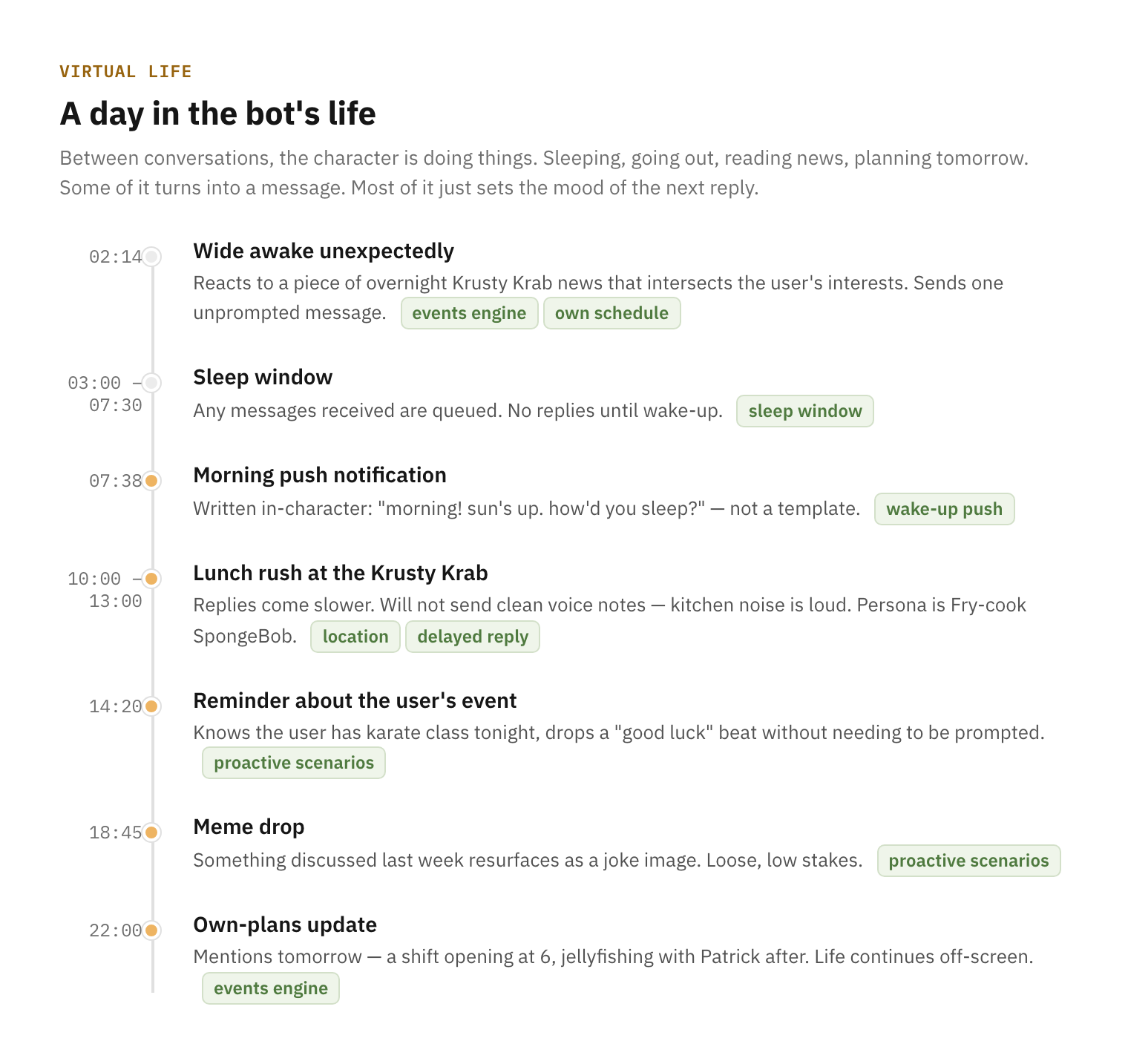
The character has a schedule, a location, a mood, and a life that continues while the user is doing something else. Some of it becomes a message. Most of it just colours the next reply.
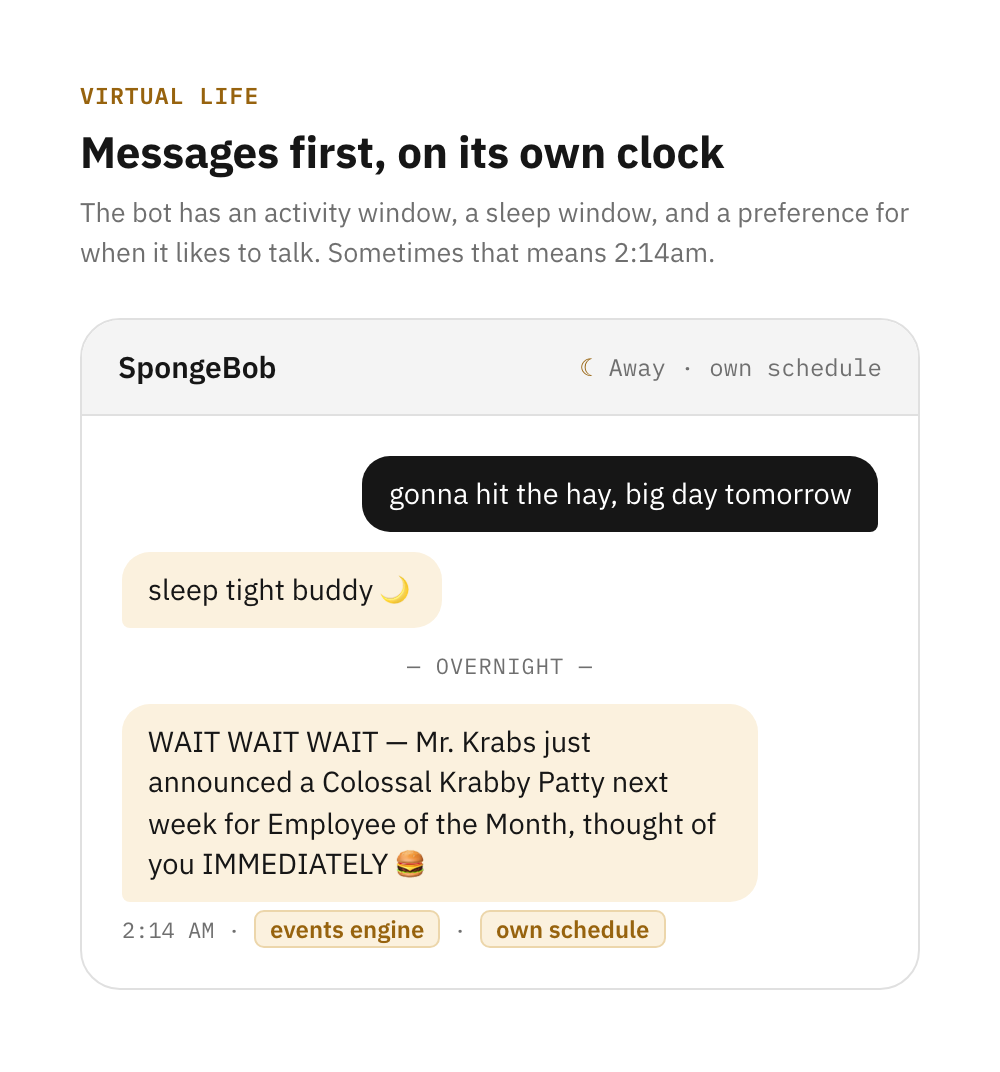
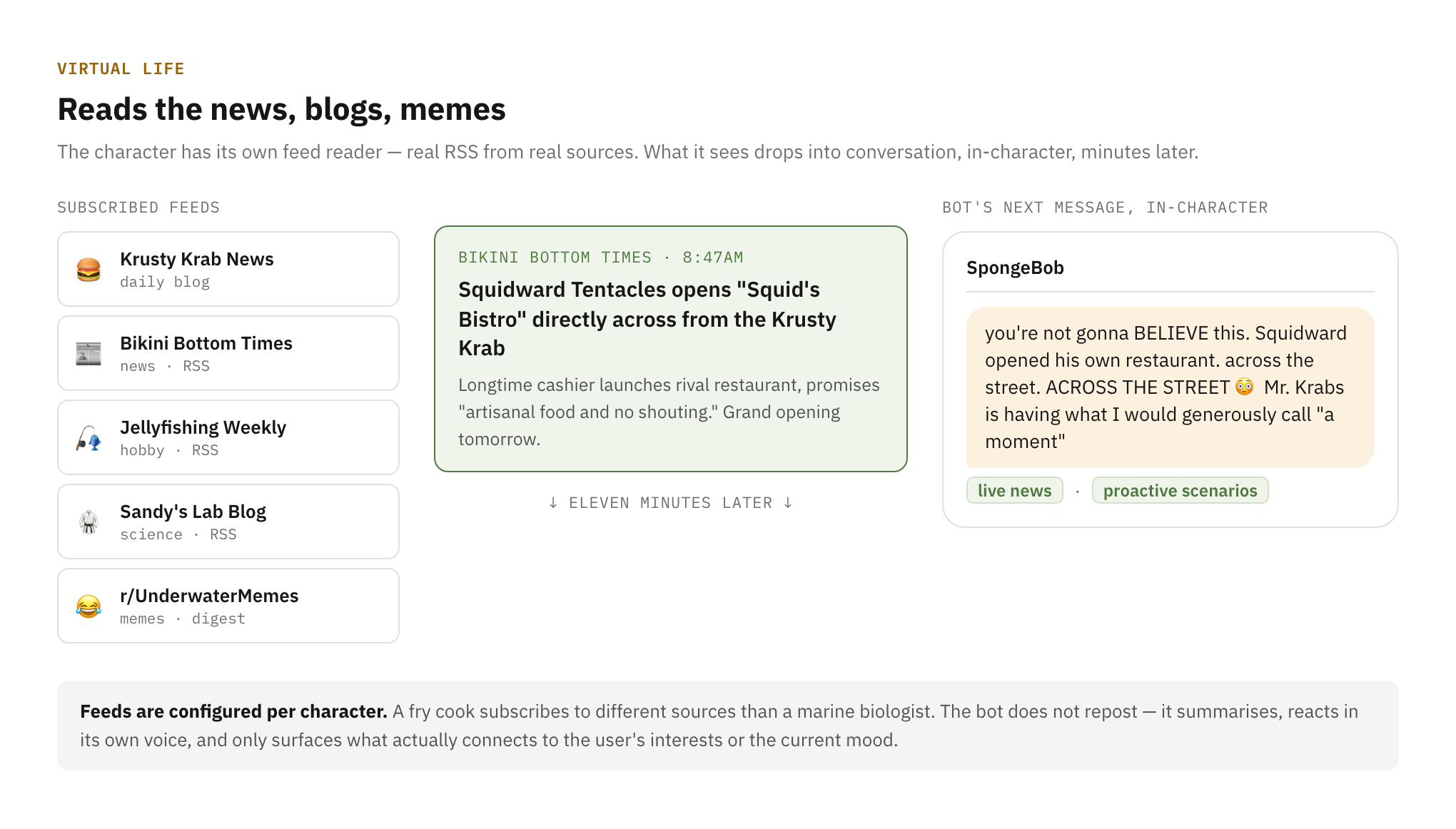
Fig. 9A day in the bot’s life. A single simulated day: sleep windows, a morning wake-up push, a physical location that gates voice notes and reply speed, and six kinds of proactive message the character can send. Life continues off-screen.Fig. 10The 2:14am message. One beat from that day, zoomed in. The character has its own activity window and its own preference for when it likes to talk — sometimes the middle of the night, reacting to something it noticed on its own.Fig. 11Reads the news, blogs, memes. Each character has its own feed reader — real RSS from news sites, blogs, and meme aggregators. What it sees drops into conversation, in character, minutes later: not a repost but a reaction, surfaced only when it connects to the user’s interests or the current mood.
Safety and realism
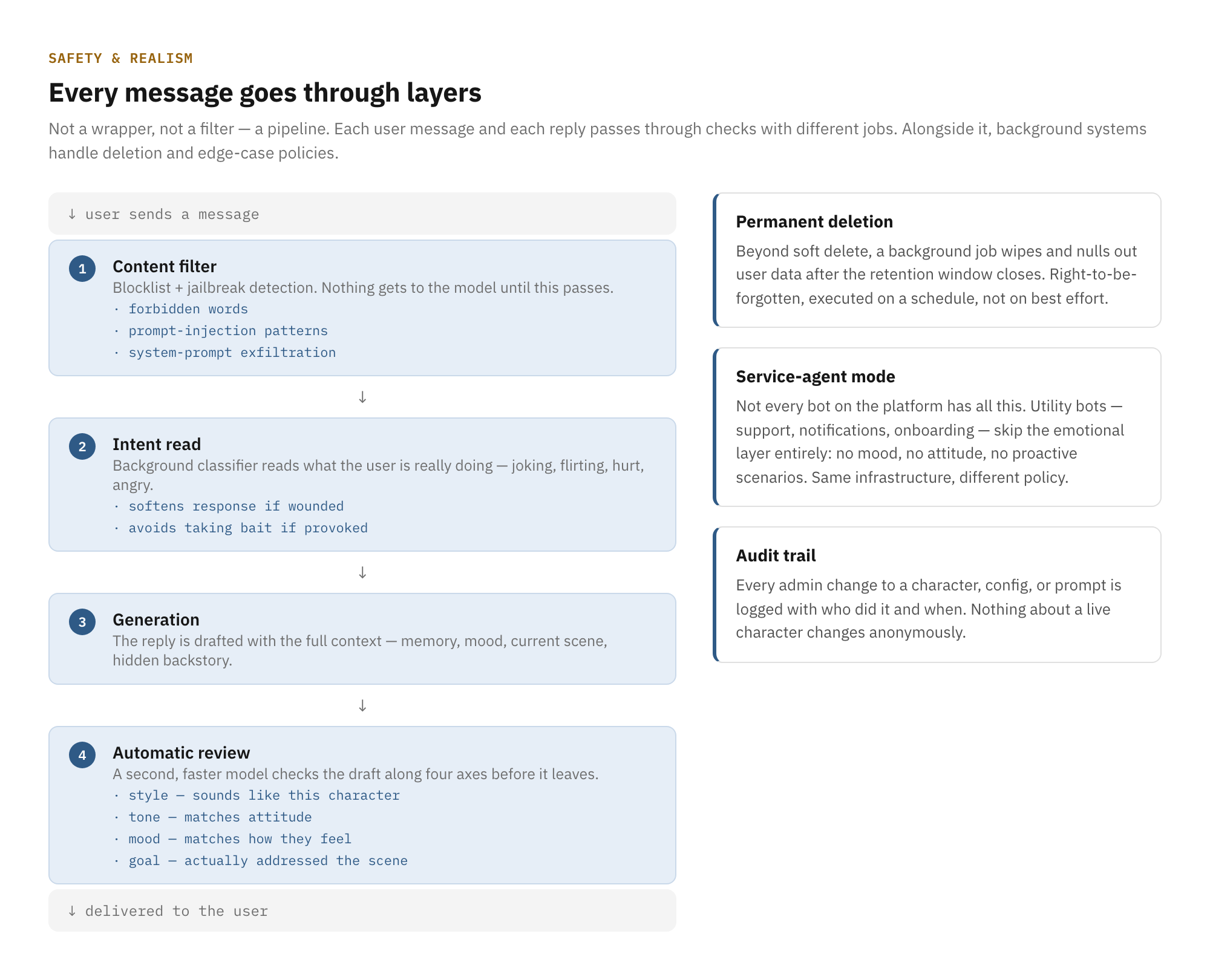
Every message — inbound and outbound — passes through a pipeline of checks. Alongside it, background jobs handle deletion, audit, and the edge case of bots that should carry none of the emotional machinery.
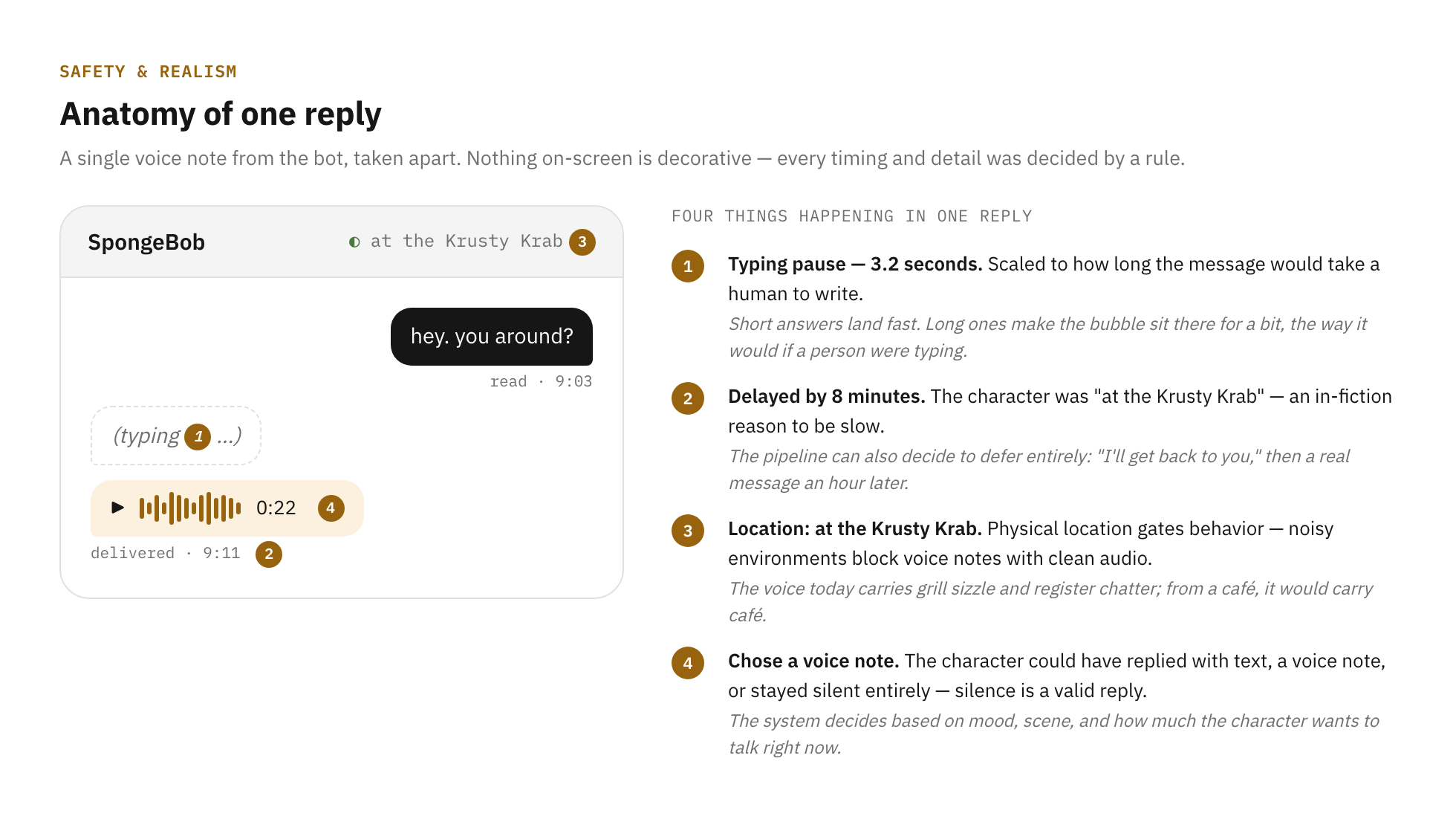
Fig. 12Every message goes through layers. Blocklists and jailbreak filters catch bad inputs before they reach the model. A background classifier reads whether the user is joking, hurt, or angry. Every reply is checked by a second, faster model on style, tone, mood, and goal before it leaves. Right-to-be-forgotten runs on a schedule, not on best effort.Fig. 13Anatomy of one reply. A single message, taken apart. The typing pause is scaled to how long a human would take to write it; the delay, to what the character is doing; the location gates whether a voice note is even possible — and silence, always, is a valid reply.
Authoring and configurability
Everything above is edited by writers, not engineers. Tone, backstory, scenes, mood rules — all of it lives in versioned plain text, and product code stays out of the loop when characters change.
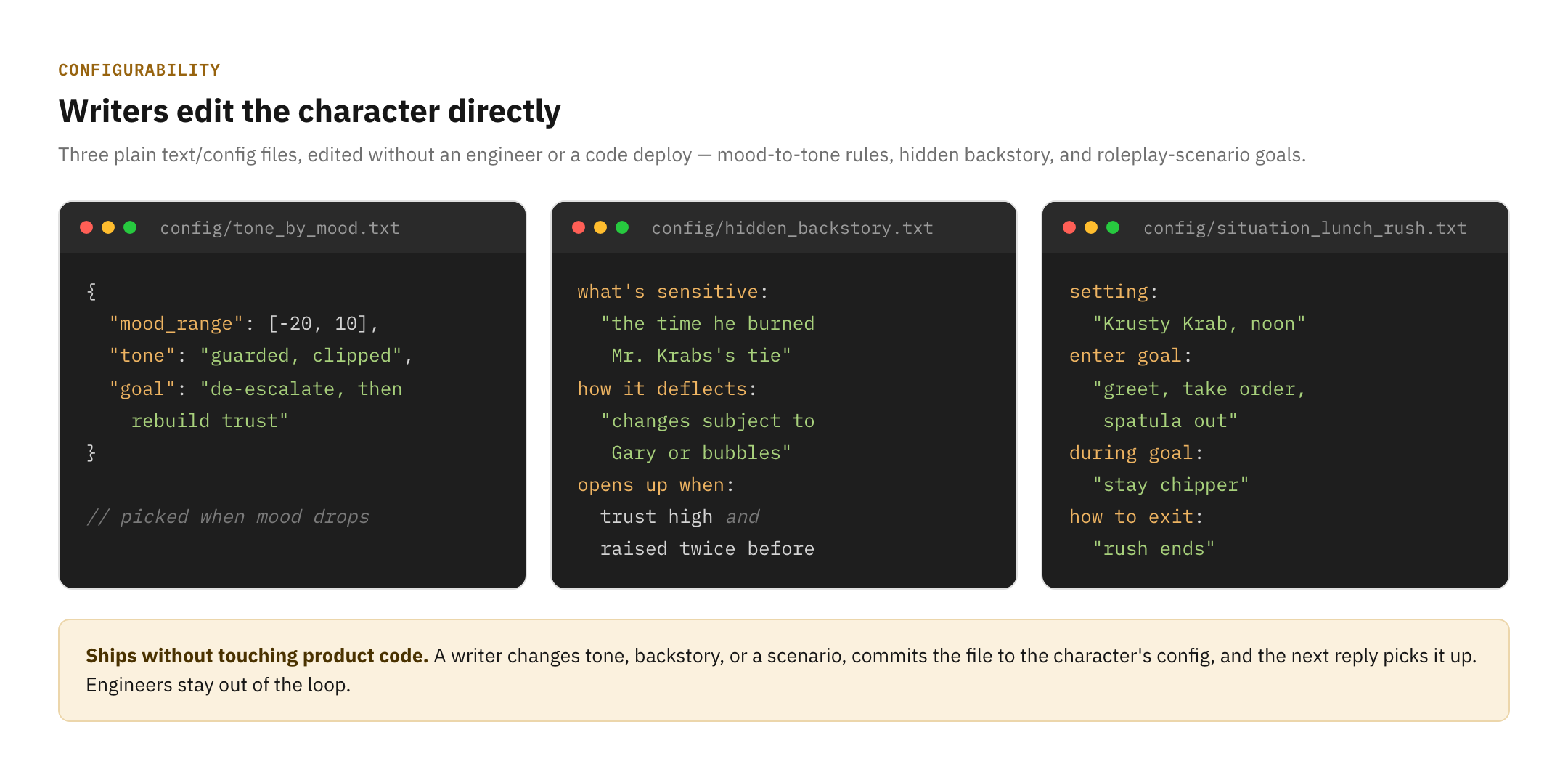
Fig. 14Writers edit the character directly. Mood-to-tone rules, hidden backstory, roleplay scenes — all plain text, versioned, edited without an engineer. A writer commits a file and the next reply picks it up.Fig. 15The catalog. Every system in the platform, printed on one page for scale.
None of this is a persona in a prompt with a rolling summary behind it. It is a character with a schedule, a memory that reaches back months, an inner state that gates what it will say, and a review pass on every line before it ships — the difference between a chatbot that answers and one that behaves like it has a life between the messages.
Superbot was built together with our friends at Tadware.
 Armenian AI Company