 Armenian AI Company
Checklist for realistic text bots
Try this with your favorite chatbot: send it two messages in a row before it answers. Bring up something from ten messages ago. Hit stop mid-sentence and see if it minds. It won’t mind, because it can’t — it isn’t built to. It behaves like a spreadsheet: silent until addressed, one answer per question, no hard feelings if you cut it off.
Slave software
We’ve started calling this “slave software” around the office, only half as a joke. It only speaks when spoken to. It answers exactly once. It answers only the thing you just said, as if the rest of the conversation never happened. And you can switch it off mid-word and it will never hold that against you. None of that is a knock on Excel — a spreadsheet is supposed to sit there quietly until you ask it something, do the one thing you asked, and stop the second you tell it to. Most software should behave exactly like this. Chatbots inherited the pattern almost by accident: the plumbing for turn-based request-and-response was already lying around, a chat API is basically a function call with extra steps, and nobody sat down and decided a conversational partner ought to act like a calculator with a personality.
But two people talking do none of these four things. So we went looking at the fields that actually study how people talk — conversation analysis, the psychology of grounding, and a surprisingly lively 2024–2026 wave of papers on proactive and full-duplex AI — and came back with a checklist. This piece walks through it: what earns a bot the right to speak first, what it’s actually allowed to interrupt, what “at the same time” even means when nobody has a mouth, and why a good answer doesn’t have to bolt itself to whatever you just typed. Fair warning: some of this is settled science from the 1970s, and some of it is a paper from eight months ago that might not survive contact with next year’s benchmark. We’ll flag which is which as we go.
A turn is a shape, not a duration
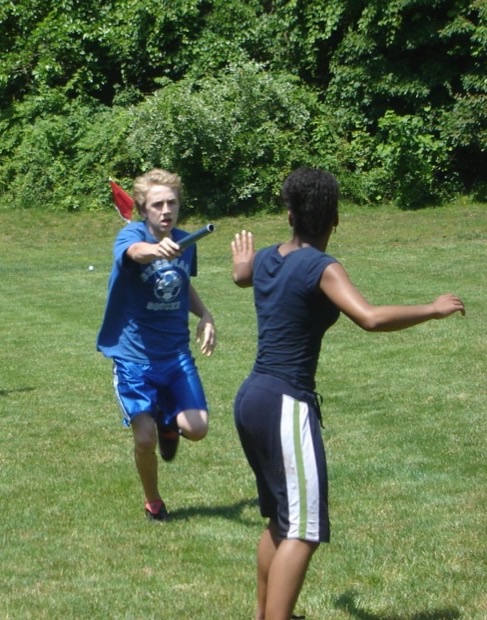
Here’s a fact about ordinary conversation that’s easy to miss because it’s so automatic: nobody hands you the floor at a random moment. Sacks, Schegloff and Jefferson worked this out in 1974, in a paper that’s still, by a wide margin, the most-cited thing the journal Language has ever published. A turn isn’t some arbitrary stretch of time you occupy until somebody cuts you off — it’s built out of turn-constructional units: a clause, a phrase, sometimes a single word, each with a grammatical shape that lets a listener sense, before it’s even finished, roughly where it’s heading. The moment it reaches that projected end is a transition-relevance place: the first point where it’s actually legitimate for someone else to jump in, not just physically possible. It’s the conversational equivalent of the exchange zone in a relay race — the baton can technically change hands anywhere, but it isn’t supposed to, and everyone in the stadium can tell the difference between a clean handoff and a dropped one.
“He said he’d — [TRP] — come by around six — [TRP] — if the weather holds.” Each bracket is a point where the clause so far is already a complete thought, even though the sentence keeps rolling. A turn is a chain of these little complete units, not one long unbroken container.
Now compare that to a chatbot’s stop button, which can fire at absolutely any point — between “he said he’d” and “come,” or halfway through a word, with total indifference to what it’s cutting through. That’s not a transition-relevance place. That’s the total absence of one. AAIC’s own FastTalk voice bot already gets part of this right: it treats a person talking over it as the start of the next turn rather than as noise to swat away, and it starts answering within a fraction of a second by splitting every reply between a fast reflexive model and a slower one that catches up with the substance. But when someone barges in, it still hard-cuts its own audio mid-word — the instant-kill pattern, just faster. The research below points at a small, deliberate upgrade it hasn’t made yet: yield at the next clause boundary instead of mid-word. A few tens of milliseconds of extra latency, in exchange for a reply that actually ends instead of one that just stops.
A 2024 paper went hunting for exactly this gap and found it. Umair, Sarathy and de Ruiter built a dataset of human-labelled transition-relevance places that show up in the middle of a turn, not just at the end, pulled from real unscripted conversation, and tested large language models against it. The title gives away the punchline: “Large Language Models Know What To Say But Not When To Speak.” Strong models wrote perfectly reasonable things — they were just bad at spotting the moments where saying anything at all would have been welcome. As of the most recent benchmarks, that timing gap is still an open problem. Nobody’s shipped the fix yet.
So “cannot be cancelled” shouldn’t mean immune to being told to stop. It should mean entitled to reach the next transition-relevance place first — free to finish the clause it’s already inside, not free to run forever. Killing a reply mid-word isn’t an intervention at a transition-relevance place. It’s the exact thing that concept exists to rule out.
Reasons to speak first
Being allowed to go first isn’t actually controversial in dialogue-systems research — it already has a name. A 2023 IJCAI survey by Deng, Lei, Lam and Chua defines conversational proactivity as the capacity to create or steer a conversation by taking initiative, as opposed to a system that only ever reacts. What that whole literature actually argues about isn’t whether a bot may speak first. It’s what earns it the right. Two 2025 papers turn that from a vibe into something closer to a rule. “Inner Thoughts” (Liu, Fang, Shi, Wu, Igarashi and Chen, CHI 2025) gives an agent a running stream of candidate thoughts, each scored for how relevant it is right now, and sets a noticeably higher bar for interrupting an already-allocated turn than for stepping into an open one — three distinct ways to join a conversation, not one all-purpose “may I speak” switch. Human raters preferred it to a purely reactive baseline by a wide margin, on every one of seven measured qualities, 82% overall. “DiscussLLM” (Patel, Melvin, Malon and Min, 2025) names the target directly — today’s large language models are fundamentally reactive, “slave software” in this piece’s own words — and proposes something narrower than “just talk more”: a plain speak-or-stay-silent decision each turn, allowed only for a closed list of five reasons — a factual correction, a definition, a missing fact, a source, or a reframing of what’s already been said.
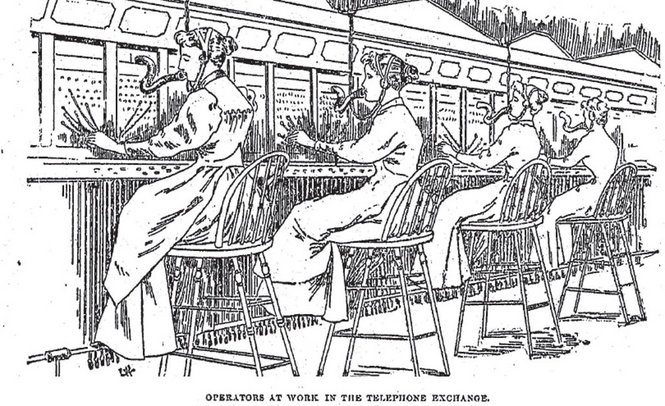
The pattern in both papers is the same, and it’s worth remembering the switchboard operator here: she wasn’t idle, and she wasn’t chatty either. She spoke up because something specific needed her, not because enough time had passed. Proactivity that survives actual users is reason-typed, not frequency-tuned. (Small caveat: the exact scoring mechanism each paper uses, and precisely where the threshold should sit, is still being worked out — a couple of specific numbers we were tempted to quote didn’t survive us double-checking them. The shape of the finding is solid. Don’t bet on the decimal points yet.) A bot deciding to speak first should be able to name which of a short list of things is happening, not just report a hunch that now feels right.
Overlap that is not a fight
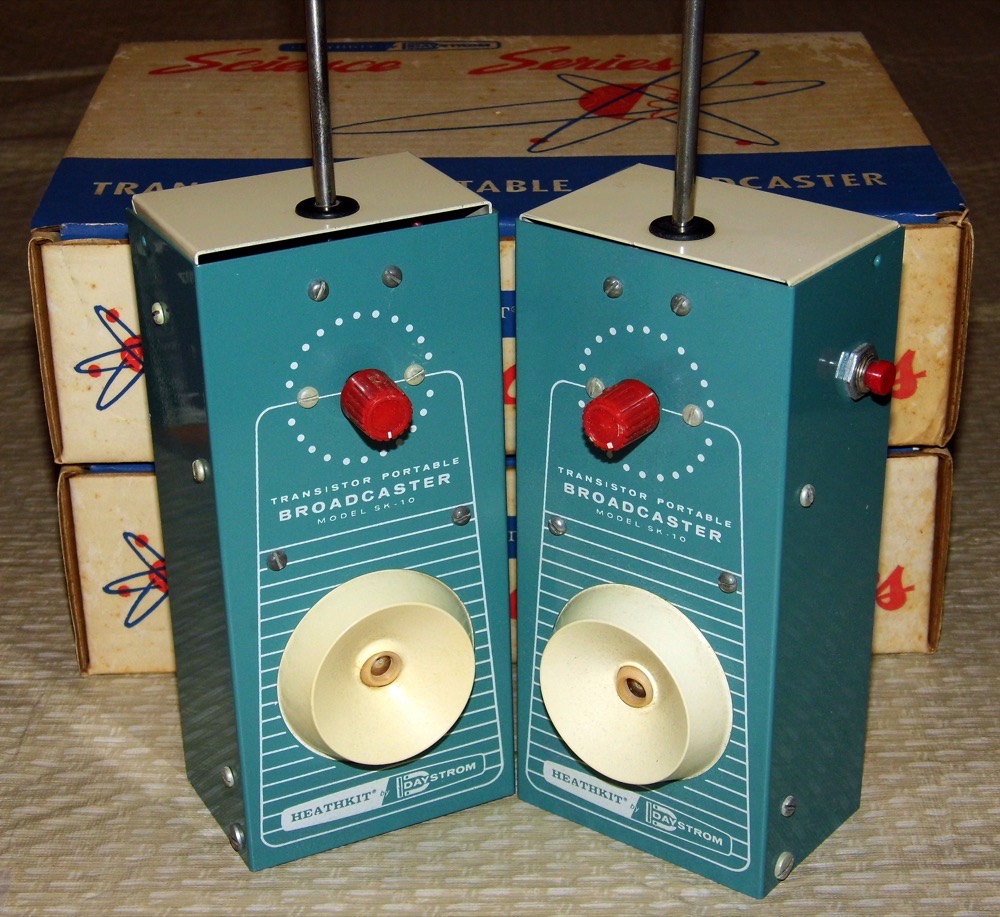
A walkie-talkie can only do one thing at a time — listen or transmit, never both — which is exactly why the whole culture of “over” and “copy that” had to get invented. Human conversation was never stuck in that mode, but a lot of chat interfaces quietly act like it is: your turn, then my turn, strict alternation, no bleed-through. The current speech-AI literature actually breaks “talking at the same time” into four separate, separately measurable behaviours: handling a pause well, backchannelling (a listener’s “mm-hm” that doesn’t take the floor), turn-taking proper, and managing genuine interruptions (Lin et al., Full-Duplex-Bench, 2025). That lines up with what conversation analysts already knew in 1974: overlapping speech in real conversation is common, brief, and mostly friendly — someone agreeing out loud, two people landing on the same word together — not a fight over who gets to keep talking.
You can’t copy that into a chat window by literally firing two messages at the exact same millisecond; a chat log doesn’t even have a way to show that meaningfully. The analogue has to be invented, not translated. A typing indicator is already a crude backchannel — it says “I’m working on it” without committing to any actual content, the text version of a listener’s “mm-hm.” A short interjection sent while someone’s still typing their next message — a quick acknowledgment, a clarifying question — can play the same cooperative role a spoken backchannel plays, as long as it stays small and doesn’t try to compete with a real reply. (Fair warning: that particular mapping is our own extrapolation from the four-category structure above, not something the papers themselves tested. It’s the shakiest claim in this piece, and we’d rather say so than dress it up.)
So the actual takeaway is narrower than “bots and humans should be able to talk over each other”: small, low-commitment signals belong in a bot’s toolkit as text’s version of a backchannel. A second, full-length answer racing your next message to the send button does not.
A turn ends; a contribution does not

Clark and Brennan’s 1991 theory of grounding draws a distinction that’s quietly one of the more useful ideas in this whole piece: a turn and a finished piece of shared understanding are not the same object. Nothing is settled just because someone stopped typing. A contribution is only actually finished once it’s been accepted — through an acknowledgment, the other person picking up the thread, or just visibly continued attention — and that acceptance can, by their own account, stretch across many turns, nested inside other exchanges the whole time. The principle of least collaborative effort that falls out of this treats the cost of reaching mutual understanding as a shared budget spent over the whole conversation, not something either side has to nail on the very first try.
Clark and Brennan also name, in so many words, the kind of medium that never expected a reply to sit right next to what it’s replying to: with email, answering machines, and letters, a message and its answer can have any number of unrelated things happen in between, and none of that carries the disruptive weight a similar gap would carry in face-to-face speech. A letter to a postman never needed to be dropped in the box the instant it was written, and its reply never needed to come back before the next one went out. That’s close to a direct license for a text bot to answer something other than your newest message — picking up a thread from three messages back once the missing piece finally shows up, answering a question that got buried under a change of topic, or just waiting until an answer is actually ready instead of manufacturing one against a deadline you never set.
Which gives us this: a reply is allowed to target something other than your most recent message, allowed to show up later than immediately, allowed to not be one tidy self-contained message at all — because what’s actually being completed is a contribution, and a contribution is allowed to outlive the single turn that started it.
Two things called “turn”
Put the first checklist item next to the last one and they look like they’re arguing with each other: one says a bot’s turn is a small, tightly bounded thing that ends at the next clause boundary; the other says a bot’s answer can wait, arrive out of order, or split across several turns. They’re not actually in conflict — they’re just answering two different questions. A turn, in the Sacks/Schegloff/Jefferson sense, is the thing two speakers take shifts occupying: bounded, sequential, one at a time, like the relay baton. A contribution, in the Clark/Brennan sense, is the thing that has to reach mutual understanding, and it’s explicitly allowed to be bigger than one turn, spread across several, accepted late, like the letter and its reply. A checklist for a realistic bot needs both ideas named separately, because collapsing them into one is exactly how “answer once, right now, to whatever’s newest” ends up looking like the only option. That illusion only holds up if you quietly treat the small bounded thing and the bigger accountable thing as the same size.
The checklist
- A reply may finish its clause before it can be stopped, not necessarily its whole turn. “Cannot be cancelled” means entitled to reach the next transition-relevance place, not immune to ever being told to wrap up.
- Speaking first needs a reason you could actually name. A correction, an unresolved thread, a genuinely new fact — not a standing invitation to volunteer whenever the mood strikes, and a stricter bar for interrupting than for stepping into a silence.
- A quick signal and a real reply are different events. A typing-indicator equivalent or a short interjection can run alongside a person’s own message. A second full answer competing with it can’t.
- An answer can target something other than your latest message. It can resume an older thread, wait until it’s actually ready, or arrive as more than one message — because what’s being completed is a contribution, not a single turn.
Two different kinds of claim are sitting inside this piece, and they’re worth telling apart before you take any of it as settled. Turn-construction and grounding are old, stable theory — 1974 and 1991 — built from real transcribed conversation and not seriously contested since. The proactivity and full-duplex research is a different animal: it’s 2024–2026, moving fast, and a few plausible-sounding specifics from it didn’t survive us double-checking while writing this — a scoring mechanism attributed to one system turned out to be looser than the paper actually claims, and a stat we liked about reactive bots underperforming at self-selection turned out to be measuring something else entirely. What held up is the shape of the finding — relevance-gated, reason-typed, mode-differentiated initiative beats one-size-fits-all initiative — not any particular number attached to it. And on the question we actually care most about — where the line between annoying and welcome sits for a bot you talk to every day, the way it presumably does for something like XiaoIce or Replika — nothing in the deployed-systems literature held up under scrutiny either.
Sources and further reading: Sacks, Schegloff & Jefferson, “A Simplest Systematics for the Organization of Turn-Taking for Conversation” (1974); Umair, Sarathy & de Ruiter, “Large Language Models Know What To Say But Not When To Speak” (EMNLP 2024 Findings); Liu, Fang, Shi, Wu, Igarashi & Chen, “Proactive Conversational Agents with Inner Thoughts” (CHI 2025); Patel, Melvin, Malon & Min, “DiscussLLM: Teaching Large Language Models When to Speak” (2025); Deng, Lei, Lam & Chua, “A Survey on Proactive Dialogue Systems” (IJCAI 2023); Lin, Lian, Li, Wang, Anumanchipalli, Liu & Lee, “Full-Duplex-Bench” (2025); and Clark & Brennan, “Grounding in Communication” (1991). Photos: relay baton pass by Patrick Bell (CC BY 2.0); telephone exchange operators, New Orleans 1893 (public domain); vintage Heathkit walkie-talkies by Joe Haupt (CC BY-SA 2.0); New York postman by Elizabeth Alice Austen, 1896, Library of Congress (public domain) — all via Wikimedia Commons.