 Armenian AI Company
The good old days were the bubble
Every warning that AI is gutting software engineering assumes the thing being gutted was sound. It was not. What burst was a bubble—and bubbles are survivable.
“A golden career ticket”
The obituaries for the software engineer share a single premise. The New York Times reports that AI coding tools, together with layoffs at Amazon, Meta, and Microsoft, are “dimming prospects in a field that tech leaders promoted for years as a golden career ticket.” The Washington Post opens in the same key: “Learning to code was supposed to save millions of would-have-been liberal arts majors. But today there are fewer programmers in the United States than at any point since 1980.” The Atlantic reaches for the right word—“The Computer-Science Bubble Is Bursting”—then aims it at the wrong target, blaming a glut of undergraduates.
Grant the grief its due: people trained for a life that is being withdrawn, and that is a real loss. But every account rests on an assumption so quiet it is never argued—that the thing AI is dismantling was, until AI arrived, a stable, well-made, fairly-paid craft. That assumption is almost entirely false. What is deflating was already a bubble long before the first model wrote a line of code. The tragedy is not that a golden age is ending; it is that so many mistook the bubble for one.

“We don’t know what programming is”
The suspicion that the craft had lost its way came from inside it. In 2013 Bret Victor gave a talk, The Future of Programming, delivered in character as an engineer in 1973 presenting his own era’s wild experimental ideas as the coming future—most of which was explored and then quietly abandoned. His warning was not that good ideas go unadopted, but that a generation grows up never knowing they existed:
“The most dangerous thought that you can have as a creative person is to think that you know what you’re doing. Because once you think you know what you’re doing, you stop looking around for other ways of doing things.” Bret Victor, The Future of Programming, 2013
It is strange to mourn a tradition as lost at the height of its prestige and pay. But that was the diagnosis: the craft the newspapers eulogize had already amputated most of its own imagination and called the stump a career.
“All code is bad”
The ordinary work was no better than the philosophy. Peter Welch’s “Programming Sucks” puts it flatly—“all code is bad”—describing the systems that run the world as a “rickety cobweb of unofficial agreements and ‘good enough for now’ code.” This is not amateurs grumbling. Jeff Atwood documented that many professional applicants could not pass FizzBuzz—printing 1 to 100 with a couple of substitutions—and Robert C. Martin compared the profession to “medicine in the dark ages.” The Standish Group’s long-running survey has for decades found only about a third of software projects delivered on time, on budget, and complete, with large ones succeeding less than a tenth of the time. A discipline whose working method is often to copy a fragment from a stranger online was not a stable profession under attack. It was already running on improvisation.
Rest and vest
Now weigh that output against its price. By 2022, before AI was priced in, median total compensation for a senior engineer at firms like Netflix, Databricks, and Cruise cleared half a million dollars a year; a principal at Facebook cleared a million. The industry even had a term of art—rest and vest—for engineers kept on full pay and stock to do little or nothing. The clearest confession came from the top. Announcing Meta’s “Year of Efficiency,” Mark Zuckerberg admitted that after deep cuts “many things have gone faster,” and that he had “underestimated the indirect costs of lower priority projects.” Translated: the company had paid a great many well-compensated people to do work it did not need. That is not a market pricing skill correctly. It is an asset trading above its value.
Perpetual beta
The incentives were worse than the pay. Two shifts turned a finished, well-made product from the goal into a mistake. The first was renting software instead of owning it: when Adobe went subscription-only in 2013, tens of thousands signed a petition against the “forced ‘renting’ of software”—rightly sensing that a product you must keep paying for no longer has to be finished. Cory Doctorow named the resulting decay enshittification, and it became 2023’s word of the year. The second was the cult of shipping: “move fast and break things” as a stated engineering value, and an Agile movement one of its own manifesto authors pronounced “subverted to the point where it is effectively meaningless.” Software stopped being something that could be done and became something perpetually in beta. The structure rewarded engagement and velocity, not quality—and got what it paid for.
Faster hardware, slower software
If the product had held up, all this would be a matter of manners. It did not. The machines got exponentially faster and the software got slower. Dan Luu measured keyboard-to-screen latency across four decades and found that “almost every computer and mobile device that people buy today is slower than common models of computers from the 70s and 80s”:
- Apple IIe (1983): 30 ms—the fastest machine he tested.
- Commodore PET (1977): 60 ms.
- MacBook Pro (2014): 100 ms.
- A new Windows desktop (2017): 200 ms—roughly six times slower to respond than a computer from 1983.
The bloat behind that lag is published, not hidden. In “Software disenchantment,” Nikita Prokopov tallied the receipts: “Windows 95 was 30MB. Windows 10 is 4GB.” “Modern text editors have higher latency than 42-year-old Emacs.” The HTTP Archive records the median web page growing roughly eightfold since 2010 to show mostly the same text and images. Niklaus Wirth named the pattern back in 1995—software gets slower faster than hardware gets faster. An industry that takes better inputs every year and returns worse outputs is not healthy. Its stated value and its delivered value have come unmoored.
A bubble, and it burst
Assemble the findings: overpaid people, by the admission of the executives who paid them, doing work that missed its targets more often than not, on business models that punished polish, shipping software that got measurably worse each year while the hardware beneath it got faster. There is a word for an asset whose price climbs while its underlying value leaks away, and it is not craft. It is bubble. AI did not destroy the value of software engineering; it revealed how much had already drained out, and forced a repricing that was a decade overdue. When the Wall Street Journal quotes a recruiter’s verdict that “one experienced engineer can have the output of a whole team,” that is not a prophecy about the future. It is an appraisal of the past.
Get in loser, we’re pivoting to AI
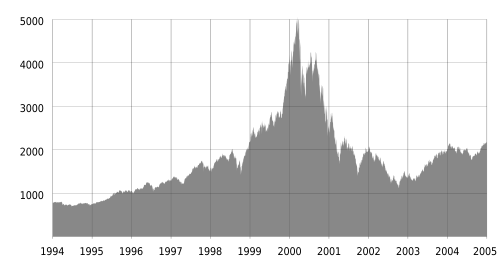
Here is the consolation, and it is a real one: the people inside a bubble do not die when it bursts. They move on, and often the burst is what clears the ground for the thing that lasts. The dot-com crash erased some five trillion dollars in market value and killed off the Pets.coms—yet Amazon, down more than ninety percent at the bottom, walked out and won the web, and the PayPal Mafia went on to start Tesla, SpaceX, LinkedIn, and YouTube. The telecom half of the same bubble laid “more than 80 million miles of fiber optic cables,” mostly sitting dark for years—until streaming and the cloud grew into it. Andrew Odlyzko gave the pattern its epitaph: “The WorldComs of the investing world might be the price we pay to get the Googles.”
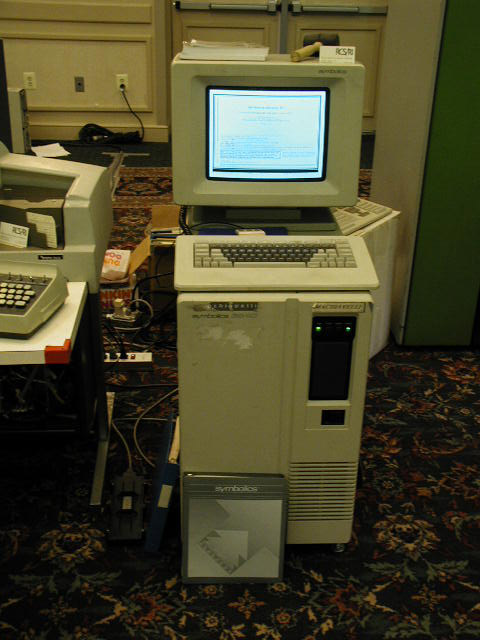
Carlota Perez has shown that each technological revolution passes through a frenzy of over-investment whose ensuing collapse is the turning point into the productive age that follows—Schumpeter’s creative destruction on schedule. And the deepest irony sits closest to home: the technology now deflating the engineering bubble was itself a burst bubble once. The 1980s AI winter wiped out a half-billion-dollar industry in a single year, and the researchers who kept at neural networks through the fallow decades collected a Turing Award in 2018 for the deep learning that runs the model you are arguing with today.
None of this makes the layoff notice easier to open. A bubble is still made of real jobs, real mortgages, real years given to a craft that people loved for real reasons—and calling the era a bubble is not the same as saying anyone who lived in it deserved the fall. The engineer being let go is not the Pets.com sock puppet. They are the fiber and the PayPal Mafia: the useful part, the part that moves on and builds the next thing.
The unkindest thing available would be to flatter them—to insist the golden age was real and will return if they just wait, when it was inflated and will not. The kind thing is the truthful thing. What is ending was not sound, and the people who walk through a deflation and out the other side reliably do better than the ones who sit inside the wreckage waiting for the old prices to come back. They never do.
Sources and further reading: the laments in the New York Times, Washington Post, and Atlantic; Bret Victor, The Future of Programming (2013); Peter Welch, “Programming Sucks”; Jeff Atwood on FizzBuzz; levels.fyi and Mark Zuckerberg’s “Year of Efficiency”; Cory Doctorow on enshittification and Dave Thomas on the death of Agile; Dan Luu on latency, Nikita Prokopov’s “Software disenchantment,” and the HTTP Archive; and on bubbles and their afterlives, the PayPal Mafia, the fiber overbuild, Carlota Perez’s work on technological surges, and the AI winter that preceded the present spring.